

Advertising transparency in the social media influencers
Article Sidebar
Main Article Content
Abstract
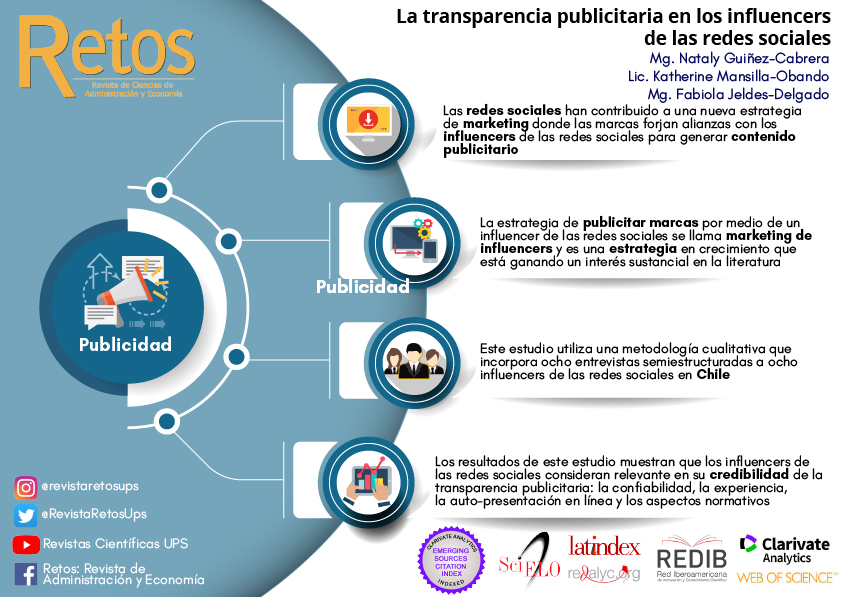
Social media has contributed to a new marketing strategy where brands forge alliances with social media influencers to generate advertising content. This strategy is known as influencer marketing, finding itself growing and gaining substantial interest in the literature. However, the current understanding of the perception of social media influencers regarding the transparency of the content they advertise is still limited, where practically all studies focus on the perception of the follower and in developed countries where there is more regulation regarding advertising transparency. To address this issue, this research used the source credibility theory and the institutional theory with the aim of exploring the perceptions of social media influencers regarding the transparency of the content they advertise. Based on a qualitative study that incorporated semi-structured interviews with eight social media influencers from Chile. The results of this study show that social media influencers consider reliability, experience, online self-presentation and the normative aspects relevant in their credibility of advertising transparency. These findings contribute to the influencer marketing literature and have important practical implications for the broad and growing field of advertising, such as marketing professionals, brands and regulators responsible for protecting the consumer.
Article Details
Authorship: The list of authors signing must include only those people who have contributed intellectually to the development of the work. Collaboration in the collection of data is not, by itself, a sufficient criterion of authorship. "Retos" declines any responsibility for possible conflicts arising from the authorship of the works that are published.
Copyright: The Salesian Polytechnic University preserves the copyrights of the published articles, and favors and allows their reuse under the Creative Commons Attribution-NonCommercial-ShareAlike 3.0 Ecuador license. They may be copied, used, disseminated, transmitted and publicly displayed, provided that: i) the authorship and the original source of their publication (journal, editorial and work URL) are cited; (Ii) are not used for commercial purposes; Iii) mention the existence and specifications of this license.